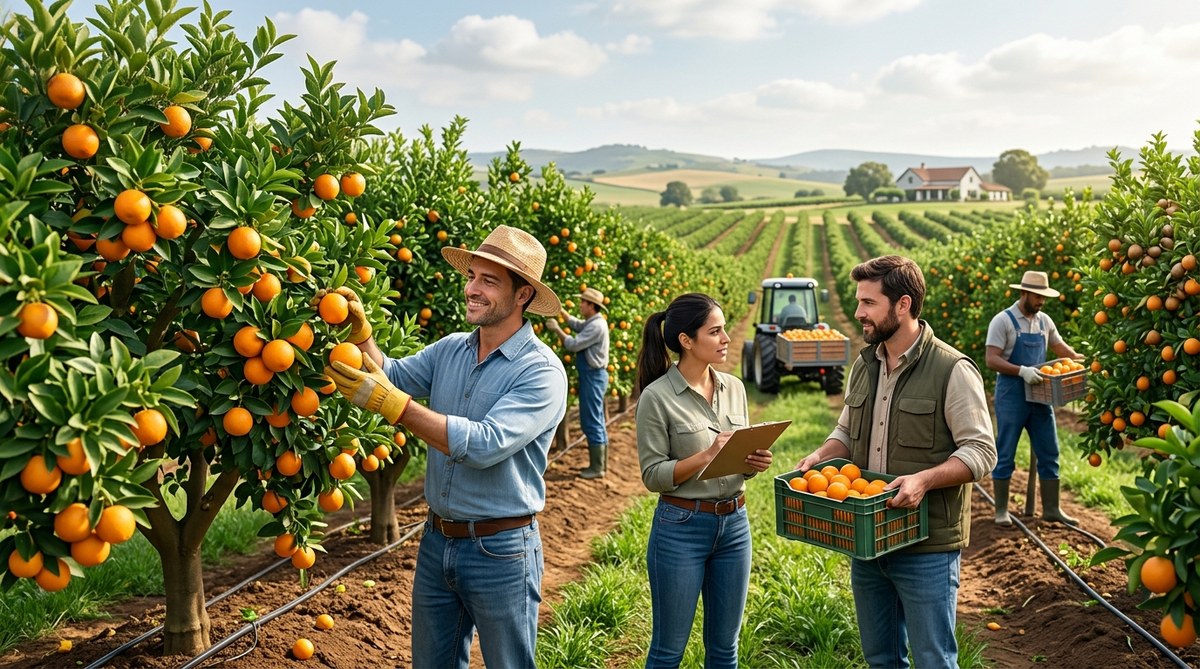
In farming circles, cooperation is more than a nice idea. It is a proven pathway to higher yields, better soil health, and stronger resilience against climate and market shocks. When farmers join forces, they can pool capital, share equipment, coordinate planting and harvesting, and adopt agroforestry practices that amplify productivity without exhausting the land. At TreeCrops.org, we spotlight cooperative farming models that align with sustainable agriculture and agroforestry principles. This article dives into how cooperative structures can lift yields, the practical steps to form and run a cooperative, and how tree crops can be woven into shared farming systems for lasting benefits.
What Cooperative Farming Is and Why It Works
Cooperative farming is a business model where farmers unite to manage certain activities collectively rather than proceeding entirely as individuals. Members own the cooperative and participate in governance, share profits, and benefit from economies of scale. The goal is to improve efficiency, reduce costs, access new markets, and spread risk while maintaining environmental stewardship.
Core Principles of Cooperative Farming
- Open and voluntary membership welcomes a diverse group of farmers
- Democratic member control ensures one member one vote, regardless of capital contribution
- Limited returns on capital reinvested to strengthen the cooperative and support member services
- Education, training, and information sharing to empower members
- Cooperation among cooperatives and community responsibility
How Coops Improve Yields in Practice
- Shared inputs and bulk purchasing cut costs for seeds, tree stock, fertilizer, and protective gear
- Coordinated planting calendars and harvest schedules reduce downtime and weather risk
- Joint access to credit and grants enables investments in machinery, storage, and processing
- Collective extension services, training, and demonstrations spread best practices quickly
- Data sharing on pest pressures, soil moisture, and yields informs better decision making
Agroforestry and Cooperative Farming
Integrating tree crops with annual crops creates multiple layers of production, stabilizes soils, and enhances biodiversity. A cooperative approach accelerates adoption by coordinating tree planting, silviculture training, and shared maintenance like pruning and mulching. Silvopasture, alleys of fruit or nut trees intercropped with legumes, and windbreaks are all most effective when planning and implementation are coordinated across members.
Benefits of Cooperative Farming for Yields
Cooperative models unlock several mechanisms that generally lead to higher yields and more sustainable outcomes.
Increased Productivity Through Shared Resources
- Access to larger and more diverse equipment pools
- Shared post harvest facilities and storage to minimize spoilage
- Joint processing lines for value added products
Market Access and Price Realization
- Collective branding and marketing reduce transaction costs
- Negotiating power with buyers leads to fairer prices
- Coordinated product offerings match market demand and reduce price swings
Risk Management and Stability
- Diversified crop mixes through cooperative planning lower single crop risk
- Shared risk funds and insurance access spread exposure
- Collective response to pests and climate events through rapid information flow
Knowledge Sharing and Innovation
- Peer learning accelerates adoption of agroforestry practices
- Regular field workshops, on farm trials, and mentorship programs
- Access to extension services and data driven decision making
Access to Capital and Credit
- Stronger credit profiles through collective financial institutions or cooperatives
- Financing for tree crop establishment, windbreaks, and soil enhancement projects
- Eligibility for government grants and conservation programs that favor cooperatives
How Cooperative Farming Models Work
Understanding how these models function helps farmers decide what structure fits their context.
Governance and Ownership
- Members elect a board of directors to guide strategy
- Regular member meetings provide oversight and accountability
- Bylaws define member rights, profit distribution, and dispute resolution
Structures in Practice
- Producer coops focus on producing and selling jointly
- Marketing coops handle collective branding and market access
- Service coops provide shared services such as input supply, processing, or logistics
Types of Agricultural Cooperatives
- Producer cooperatives that pool harvests and share processing facilities
- Marketing cooperatives that negotiate contracts and sell to markets
- Service cooperatives that offer shared irrigation, equipment, or extension services
Legal and Financial Considerations
- Compliance with local cooperative statutes and tax treatment
- Transparent financial reporting and independent audits
- Clear member agreements about capital shares and profit distribution
Integrating Tree Crops with Cooperative Farming
Tree crops can be a powerful component of cooperative farming, offering long term yields, shade, habitat, and diversified revenue streams.
Silvopasture and Timber Lines within Cooperatives
- Coordinated design of silvopasture systems that integrate trees with grazing or cropping
- Shared maintenance plan for trees, understory crops, and soil health
- Group procurement of hardy, climate adapted tree varieties
Alley Cropping and Intercropping with Cooperative Planning
- Members select complementary crop and tree partnerships to optimize light, water, and nutrients
- Shared mapping tools help track performance, pest pressures, and harvest windows
- Cooperative experimentation with different species and layouts speeds learning
Tree Stock Procurement and Maintenance in a Coop
- Bulk purchasing of high quality grafted and native tree stock
- Collective pruning, mulching, and pest management
- Joint nursery operations or seedling distribution to members
Implementing a Cooperative Farm: A Practical Guide
Starting a cooperative requires clear goals, careful planning, and ongoing governance. Here is a practical roadmap.
- Clarify mission and scope
- Define aims such as increasing yields by a certain percentage, improving soil health, or expanding into new markets
-
Decide which activities will be cooperative and which are best kept on a member basis
-
Identify stakeholders and build a core team
- Engage farmers, agronomists, and local community organizations
-
Form a steering group to lead the initial design and outreach
-
Form a legal entity and draft bylaws
- Choose a structure that fits local law and your goals
-
Create bylaws covering membership, governance, profit distribution, and dispute resolution
-
Develop a business plan and budget
- Assess capital needs for equipment, storage, and tree stock
-
Estimate operating costs, revenue streams, and break even points
-
Secure financing and in kind contributions
- Explore microfinance, grants for agroforestry, and government programs
-
Gather in kind support such as land access, transportation, or labor
-
Launch a pilot and scale up
- Start with a small cohort of farmers and a limited product mix
-
Measure yields, costs, and member satisfaction; adjust before expanding
-
Monitor, evaluate, and adapt
- Use simple dashboards to track key performance indicators
- Hold regular review meetings to address challenges and celebrate wins
Technology and Data for Cooperative Management
Smart use of data and technology strengthens cooperative governance and yields.
Farm Management Software and Data Sharing
- Centralized platforms for planning, inventory, and financials
- Shared access to agronomic recommendations and field notes
- Data driven decision making supports crop diversification and tree integration
Remote Sensing and Yield Monitoring
- Satellite or drone imagery helps monitor crop vigor and tree health
- Soil moisture and nutrient mapping informs irrigation and fertilizer strategies
- Early warning of pests and diseases reduces losses
Training and Data Literacy for Members
- Regular training builds confidence in using digital tools
- Clear data governance policies protect member privacy and trust
- Transparent reporting of results reinforces accountability
Challenges and How to Overcome Them
Cooperative farming is highly rewarding but not without hurdles. Anticipating challenges helps teams prepare.
Governance and Decision Making Hurdles
- Slow decision cycles if many voices must approve
- Potential for conflicts over resource allocation
- Mitigation: define decision rights, use structured processes, and rotate leadership roles
Capital and Cash Flow Constraints
- Upfront costs for equipment and tree stock can strain finances
- Mitigation: phased investments, grant funding, and reserve funds
Trust, Transparency, and Accountability
- Hidden or inconsistent reporting can erode member confidence
- Mitigation: robust financial controls, independent audits, and regular open meetings
Market Volatility and Competitive Pressures
- Price swings for fresh produce and tree products can impact revenue
- Mitigation: diversified product lines, long term contracts, and dynamic risk management
Environmental and Community Benefits
Cooperatives align well with environmental stewardship and rural development.
Soil Health and Biodiversity
- Integrated tree crops improve soil structure, organic matter, and microbial life
- Diversified landscapes host beneficial insects and wildlife
Carbon Sequestration and Climate Resilience
- Tree belts and agroforestry practices sequester carbon
- Diverse systems weather droughts and floods more effectively than monocultures
Social Equity and Rural Development
- More stable incomes support families and youth in rural areas
- Shared knowledge and cooperative governance empower community leadership
Case Studies and Real World Examples
While every cooperative has its own path, several common patterns emerge from successful models.
Case Study: Silvopasture Cooperative in the Tropics
- Farmers collaborated to plant tree legume belts along pastures
- Shared grazing management reduced soil erosion and increased forage yield
- Co op processing and marketing added value through fruit and fodder products
Case Study: Shade Grown Fruit Co op in Asia
- Producers joined to market shade grown citrus and nuts under a common brand
- Coordinated harvest windows and reduced post harvest loss
- Investments in shared cold chain equipment improved market access
Case Study: Smallholder Tree Crops Cooperative in Sub Saharan Africa
- Members pooled tree seedlings, pruning services, and transport
- Bulk selling of high demand tree crops increased farm gate prices
- Community extension programs spread agroforestry knowledge quickly
Note that these scenarios illustrate common dynamics rather than prescribing a single pathway. Your cooperative should tailor practices to local climate, soil, culture, and market realities.
Getting Started with TreeCrops Co op Model
TreeCrops.org champions cooperative farming as a viable route to sustainable yields and resilient agroforestry systems. If you are considering forming a cooperative in your region, here are practical starting points.
Resources and How TreeCrops.org Supports Cooperatives
- Guides on designing agroforestry friendly co ops
- Templates for bylaws, member agreements, and governance charts
- Case studies and field notes from farmers implementing cooperative models
- Directory of extension services, financing opportunities, and training partners
Next Steps and Contact Information
- Gather a core group of interested farmers and a local advisor
- Define your core objective, whether it is yield enhancement, market access, or environmental goals
- Reach out to TreeCrops.org for customized guidance, resources, and an experienced network
- Start with a pilot project that can demonstrate value within a single season
Final thoughts
Cooperative farming holds the promise of higher yields, healthier soils, and more resilient farming communities when grounded in solid governance, agroforestry thinking, and shared commitment. By pooling resources, knowledge, and markets, farmers can achieve outcomes that are hard to reach alone. The trees planted today through cooperative planning can generate dividends for decades, while the cooperative itself grows stronger with every harvest, every shared tool, and every new member welcomed into the circle. If you are ready to explore cooperative farming as a pathway to more sustainable yields, TreeCrops.org is here to help you design, implement, and optimize your own cooperative farming journey.