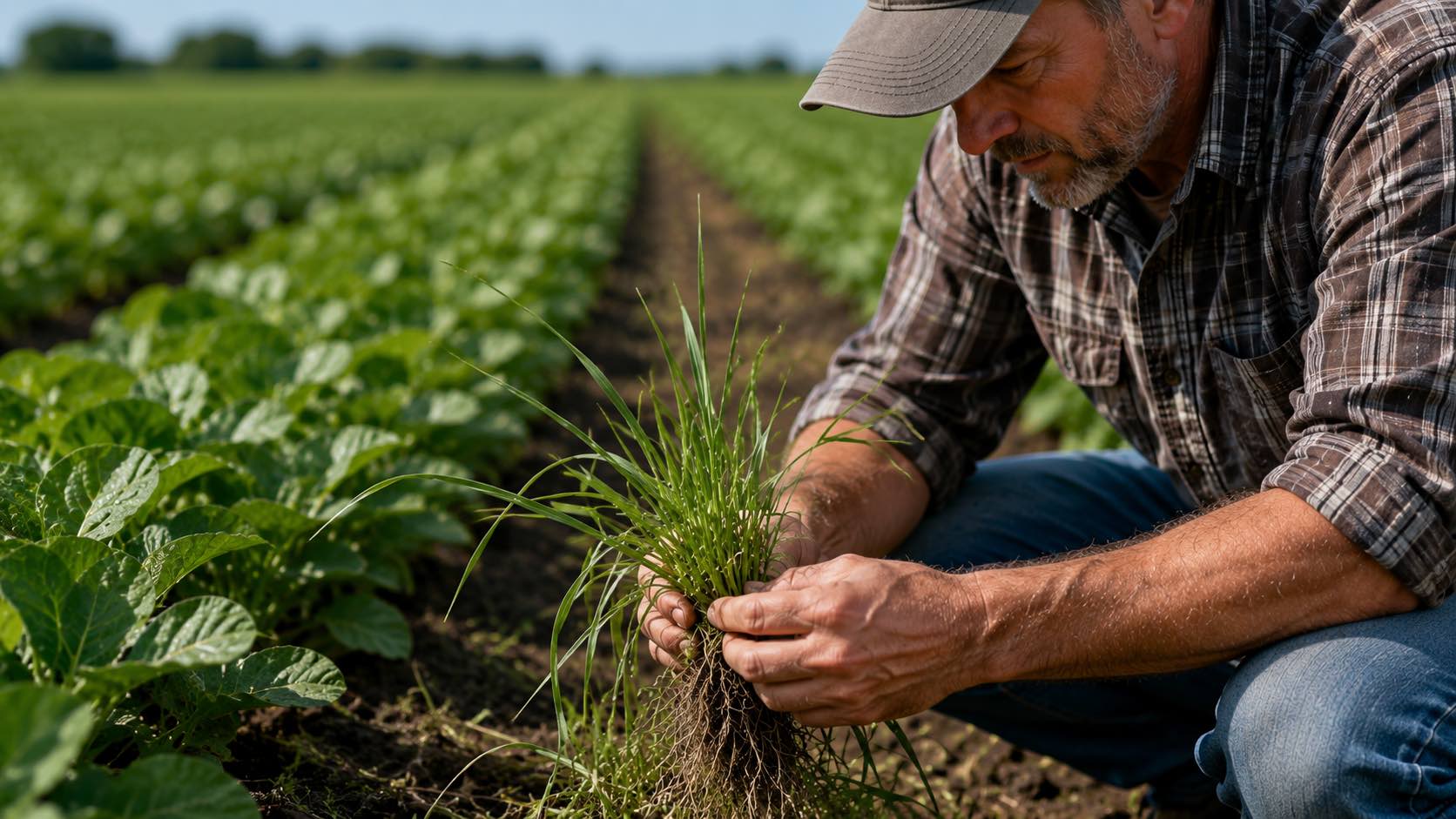
Managing a landscape or a commercial crop requires a keen understanding of the tools available to combat invasive species. When the goal is to knock back stubborn grassy invaders without touching broadleaf plants, using the right grass herbicide in Canada becomes genuinely important. These products, grouped under the term graminicides, are designed around the unique physiology of grasses rather than plants in general. Knowing what they actually do inside the plant makes it far easier to choose correctly and apply effectively.
Group 1 Herbicides: Targeting Fats
Group 1 herbicides are postemergence herbicides, or those that are applied after the grass has already come up and is actively growing. They are absorbed through the foliage and move systemically to the meristems, the growth points that generate new tissue. They deactivate an enzyme called acetyl-CoA carboxylase, or ACCase. This enzyme is responsible for fatty acid synthesis. Without fatty acids, there are no new cell membranes and without cell membranes, the plant cannot grow.
Within Group 1, there are three distinct chemical families worth understanding separately.
The Fops, formally known as aryloxyphenoxypropionates, are the most widely recognized. Green foxtail and yellow foxtail are common targets. After application, the chemistry moves to both roots and shoots, and within a few days, the growing point becomes brown and soft. That visible collapse is the fatty acid pathway shutting down.
The Dims, or cyclohexanediones, cover some of the same ground but bring different strengths. They tend to perform well against volunteer cereals and wild oats, and growers often notice they act a little faster than Fops during warm, humid weather. Because Dims break down relatively quickly in the soil, they carry less residual risk for crops planted in the following season.
The Dens are the newest addition to Group 1. The key active ingredient here is pinoxaden. This chemistry was specifically developed with cereal crop safety in mind, and it performs well in wheat and barley without causing the kind of crop damage that can sometimes occur with older formulations. Its broad activity, combined with that selectivity, has made it a useful tool for mixed operations.
Group 2 Herbicides: Targeting Proteins
Whereas Group 1 messes with fat production, Group 2 targets proteins. These herbicides are not selective to grasses. They work on grasses as well as broadleaf plants, so selectivity in this group is a matter of crop tolerance rather than plant type. They’re called acetolactate synthase inhibitors, or ALS inhibitors for short. The enzyme they inhibit is at the beginning of the pathway that makes three branched-chain amino acids: leucine, isoleucine and valine. Grasses need those amino acids for protein production. Any herbicide from this group essentially starves the plant of its own building materials.
Sulfonylureas are perhaps the most striking members of this group in terms of how little product is actually needed. Effective rates can fall as low as a few grams per acre, which still seems counterintuitive even to experienced growers. Growth arrest happens fast after application, though the visible symptoms, generally a reddening or yellowing of the leaves, often take close to a week to appear.
Imidazolinones differ in one important respect: they remain active in the soil for an extended period. That residual presence catches later flushes of germinating weeds that a single pass might miss entirely. They are commonly used in Clearfield production systems, where the crop itself has been bred to tolerate this chemistry, giving growers season-long control without sacrificing the cash crop.
Other chemistries in Group 2 are triazolopyrimidines and sulfonylamino-carbonyl triazolinones. These are more commonly used in tank mixes rather than on their own, to broaden the spectrum of weeds targeted. They are also an effective way to dilute selection pressure on weed populations when using more than one member of different subgroups together, one of the more practical tools growers have to reduce resistance.
Getting the most from either group
A few practical points apply broadly across both groups. Actively growing weeds are the baseline requirement. Grasses stressed by drought or cold still look like weeds, but their internal movement of compounds slows considerably, and that translates directly into weaker results in the paddock.
Surfactants matter more than growers sometimes expect. Grass leaves carry a waxy surface coating that sheds spray droplets efficiently. A good surfactant changes how the droplet behaves on contact and improves absorption of the active ingredient. The specific type recommended varies by product, so reading the label before mixing is not optional.
Rotating between Group 1 and Group 2 products across seasons remains one of the most practical strategies for maintaining long-term efficacy and no single herbicide in Canada carries the full selection pressure season after season. Different modes of action mean different selection pressures on the weed population, making it considerably harder for resistant biotypes to establish and spread.