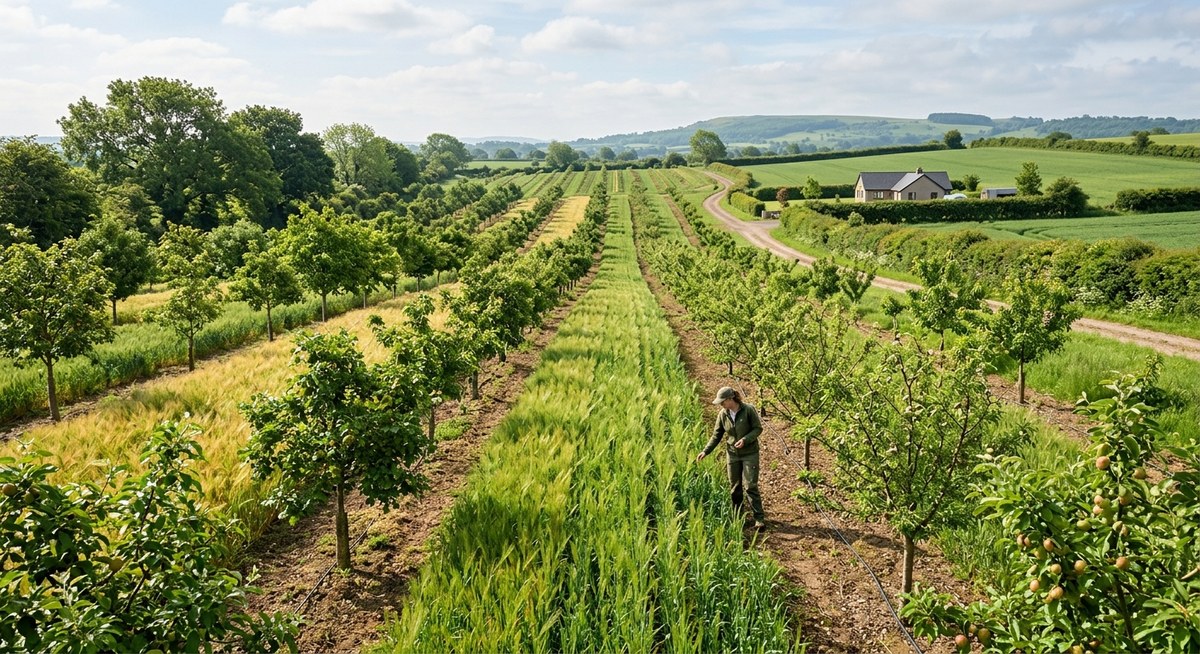
Imagine a farm where shade from carefully placed trees cools leafy greens in the heat of noon, where roots reach deep to mine nutrients and pull up water in dry spells, and where the branches above work with the crops to create a thriving, low input system. That is agroforestry in action. At TreeCrops.org we celebrate the power of integrating trees with farming, not as a niche idea but as a practical, scalable approach to sustainable agriculture. Agroforestry blends tradition with innovation, pairing agricultural crops and livestock with trees to create systems that are more productive, more resilient, and better for the environment. In this article we explore how agroforestry can transform farms of all sizes, from family plots to cooperative farming networks, by building multiple profits and ecosystem services into one land management strategy.
What is Agroforestry?
Agroforestry is the intentional integration of trees or shrubs with crops and/or livestock on the same farming land. This design creates three dimensional agricultural landscapes where above ground plantings, root systems, and soil biology work together. Trees act as living partners by providing shade, wind protection, soil improvement, habitat for beneficial species, and long term carbon storage. Crops benefit from moderated microclimates, reduced erosion, and nutrient cycling driven by tree roots and leaf litter. Livestock gain shelter, forage options, and improved water quality through improved nutrient retention.
In practical terms agroforestry can take many forms. Alley cropping places rows of trees between crops to create a sheltered corridor. Silvopasture combines trees with grazing livestock, giving animals shade and shade-grown forage. Windbreaks or shelterbelts use tree rows to reduce wind erosion and protect crops and soil. Forest farming integrates high value crops like mushrooms or medicinal herbs under a tree canopy. Each configuration has its own design considerations but all share a core principle: productive land use that blends ecological dynamics with human needs.
TreeCrops.org is dedicated to sustainable agriculture and agroforestry, with a focus on cooperative farming models and environmental benefits. Our approach emphasizes practical, scalable solutions that farmers can adapt in real life. Agroforestry is not a distant ideal; it is a working system that can improve yields, reduce risk, and create more stable farm incomes when thoughtfully planned and managed.
The Core Benefits of Agroforestry
There are many reasons farmers choose to adopt agroforestry. Here are the core benefits that matter most for sustainable farming and cooperative models.
1. Resilient and sustainable food production
- Diversified outputs reduce risk. With multiple crops and products, a farm is less sensitive to price swings or a single pest outbreak.
- Microclimate buffering protects crops. Tree canopies reduce heat stress, while shade can slow moisture loss from soil.
- Integrated nutrient cycling supports soil power. Tree roots access subsoil nutrients and return organic matter to the soil through leaf litter and root exudates.
- Long term stability. Trees provide a stabilizing presence that sustains soil health and farm productivity across generations.
2. Increased productivity and resource efficiency
- Space is optimized. By using vertical space and combining trees with crops and animals, farms extract more function from the same area.
- Water use efficiency improves. Tree canopies reduce evaporation and soils retain moisture longer after rainfall.
- Input costs can fall. Natural protection and nutrient cycling reduce the need for synthetic inputs such as fertilizers and pesticides.
- Yield stability. Diverse outputs and shade protection can lead to steadier harvests year after year.
3. Biodiversity and ecosystem services
- Habitat creation supports beneficial species. Pollinators, natural pest managers, and soil microbes thrive in diversified landscapes.
- Genetic diversity is preserved. A mix of tree species and crops broadens the gene pool and resilience to diseases.
- Pollination and pest regulation improve. Trees provide nectar, shelter, and alternative hosts that keep pest pressure in check.
4. Climate action and carbon storage
- Trees sequester carbon over decades. Strategic tree planting can contribute to net zero goals and climate resilience.
- Reduced emissions through efficiency gains. Lower input needs translate to fewer emissions from fertilizer production and field operations.
- Green infrastructure value. Agroforestry creates living landscapes that foster climate mitigation and adaptation.
5. Soil health and water management
- Erosion control through tree roots and ground cover. Roots anchor soil and leaf litter builds soil organic matter.
- Water infiltration and retention improve. Tree systems slow runoff, increase infiltration, and reduce flood risk.
- Nutrient cycling enhances soil fertility. Deep roots bring up nutrients and return them to topsoil through litter and root turnover.
6. Economic advantages and cooperative farming benefits
- Diversified income streams. Timber, fruit, nuts, mulch, and non-timber forest products complement traditional crops.
- Cooperative models share risk and knowledge. Producer groups can coordinate tree and crop planning, marketing, and access to services.
- Labor efficiency and shared infrastructure. Community based approaches allow farmers to pool equipment, knowledge, and labor for seasonal tasks.
- Public and market opportunities. Agroforestry can open doors to certification schemes, eco-labels, and premium markets that value sustainable farming practices.
Types of Agroforestry Systems
Understanding the different system types helps farmers choose designs that fit their land, climate, and market opportunities.
Alley Cropping and Multistory Planting
Rows of trees are planted with crops in between. This structure creates a multi-tiered system that supports diverse crops and enhances soil health through varied root depths and organic matter input.
Silvopasture
Trees provide shade and shelter for grazing animals while offering forage and timber or non-timber products. This system can improve animal welfare and diversify farm income.
Windbreaks and Shelterbelts
Strategic tree belts reduce wind speed, protect microclimates, and conserve soil moisture. They also shelter crops, create wildlife habitat, and improve aesthetic value.
Forest Farming and Understory Cropping
Edible and medicinal crops grown beneath a tree canopy take advantage of the stable shade and soil conditions created by trees. This approach can target high value crops with relatively low input needs.
Harvestable Woodlands and Boundary Plantings
Trees planted along field margins or property boundaries can contribute to carbon storage, biodiversity, and landscape resilience while providing additional revenue streams.
Planning and Implementing Agroforestry on Your Farm
Successful agroforestry starts with thoughtful planning and a staged approach. Here are steps to help you move from concept to implementation.
- Assess your site and climate. Soil type, rainfall patterns, slope, and microclimates influence tree selection and system design.
- Define objectives. Are you most interested in carbon storage, biodiversity, income diversification, or input cost reduction? Clear goals guide species choice and layout.
- Select compatible species. Choose trees that complement crops and livestock, provide complementary root structures, and suit local conditions.
- Map layout and spacing. Plan the vertical and horizontal arrangement to maximize shading, wind protection, and nutrient cycling without overly shading crops.
- Source quality planting stock. Work with nurseries or community groups to obtain healthy seedlings adapted to your climate.
- Develop a phased implementation plan. Start with one or two blocks and monitor performance before expanding.
- Build governance and collaboration. Cooperative farming models enable shared maintenance, marketing, and decision making.
- Integrate with existing practices. Farm sanitation, pest management, and crop rotation should align with the agroforestry design.
Measuring Success and Monitoring
To understand the impact of agroforestry on your farm, track a mix of biophysical and economic indicators.
- Soil health indicators: organic matter, soil texture, microbial activity, earthworm density.
- Crop yields and quality: compare with baseline data before establishing trees.
- Biodiversity metrics: pollinator counts, beneficial insect populations, bird presence.
- Tree health and growth: survival rates, canopy cover, biomass accumulation.
- Water management: soil moisture levels, runoff, and infiltration rates.
- Economic performance: changes in input costs, cropping portfolio income, and harvest timing.
- Climate metrics: carbon stock estimates and reductions in greenhouse gas emissions associated with inputs.
Regular monitoring helps you adjust management practices. It also provides concrete evidence for cooperative members, funders, and markets that value sustainable farming.
Cooperative Farming Models and Agroforestry
Cooperative farming models align well with agroforestry because they enable shared risk, collective knowledge, and joint marketing of diversified products. Here are some practical approaches:
- Shared nursery and seedling programs. Cooperatives can collectively propagate trees and seedlings, reducing costs and improving genetic diversity.
- Joint design and ownership. Farmer groups collaborate on landscape design, land use planning, and long term commitments to a shared agroforestry system.
- Cooperative marketing and value addition. Collectively marketing timber, fruit, nuts, herbs, and essential oils created through agroforestry adds value and reduces competition among smallholders.
- Knowledge exchange networks. Peer learning, field days, and farmer-to-farmer mentoring help spread successful practices quickly.
At TreeCrops.org, we emphasize cooperative farming models because shared effort often leads to faster adoption, better outcomes, and stronger community resilience. Agroforestry shines when it is embedded within a supportive network that rewards sustainable practices and cooperative governance.
Case for Smallholders and Large Farms Alike
Agroforestry is not limited to a single farm type. It can scale from smallholder plots to larger farm operations. Key benefits across scales include:
- Improved profitability with diversified products.
- Reduced vulnerability to weather extremes and pest outbreaks.
- Improved land productivity over time as soil health builds.
- Long term asset creation through timber and non-timber forest products.
- Enhanced resilience of farming communities through shared knowledge and resources.
For smallholders, agroforestry can be a stepping stone to more sustainable livelihoods, enabling families to earn income while preserving soil and water resources for future generations. For larger operations and cooperatives, agroforestry offers a pathway to modernize land management, strengthen supply chains, and meet consumer demand for environmentally responsible farming.
Getting Started with Agroforestry on Your Farm
If you are ready to begin or expand an agroforestry project, here are practical steps to get moving.
- Start with a pilot area. Choose a field or edge where you can test a simple agroforestry configuration.
- Engage local experts. Cooperative extension services, agroforestry researchers, and experienced practitioners can provide site specific advice.
- Build a cost and income forecast. Compare upfront costs, ongoing maintenance, and expected returns from multiple products.
- Develop a maintenance plan. Trees require pruning, weed control, and sometimes pest management; a clear schedule keeps the system productive.
- Create a knowledge network. Gather a group of peers to share experiences, successes, and lessons learned.
Design Principles for Successful Agroforestry
To maximize the benefits of agroforestry, keep these design principles in mind:
- Compatibility: choose tree and crop species with compatible root depths, nutrient needs, and growth cycles.
- Diversity: plant a mix of species to spread risk and deliver multiple ecosystem services.
- Temporal alignment: ensure that tree growth and crop production timelines align to support ongoing yields.
- Local adaptation: use species and management practices suited to your climate and soil conditions.
- Community focus: engage neighbors, buyers, and cooperative partners to sustain adoption and share rewards.
Environmental and Social Benefits for Communities
Beyond farm level gains, agroforestry supports broader environmental and social goals.
- Biodiversity protection: diversified landscapes support pollinators, birds, and soil life.
- Climate resilience: trees buffer temperature extremes, reduce drought stress, and improve water security.
- Soil stewardship: long term soil health safeguards farms against erosion and loss of fertility.
- Community livelihoods: cooperative models provide stable income and knowledge sharing, strengthening rural economies.
Common Challenges and How to Overcome Them
Adopting agroforestry can come with challenges. Here are common issues and practical solutions:
- Initial costs and risk: Seek cooperative financing, government programs, or cost share partners to reduce upfront costs.
- Knowledge gaps: Invest in training and field demonstrations; partner with research institutes or extension services.
- Land tenure and governance: Establish clear land use agreements and governance structures within cooperatives to manage shared resources.
- Maintenance intensity: Plan for seasonal tasks and share labor across the group; use fast growing species to accelerate early gains.
Why TreeCrops.org Supports Agroforestry and Cooperative Models
TreeCrops.org is dedicated to sustainable agriculture and the promise of agroforestry as a practical path to healthier soils, resilient farms, and thriving rural communities. Our emphasis on cooperative farming models helps farmers work together to design, finance, implement, and market agroforestry systems. We provide research summaries, field-tested practices, and accessible guidance to help farmers transition smoothly from conventional methods to integrated landscapes.
Practical Resources and Next Steps
- Farm planning templates: Layout planners, species selection guides, and phased implementation roadmaps.
- Species directories: Climate appropriate tree and shrub options for various regions.
- Cooperative development guides: Governance, marketing, and financial planning for farmer groups.
- Field demonstrations and workshops: Case studies from real farms and hands on learning opportunities.
- Community forums: Platforms to share lessons, ask questions, and connect with practitioners.
If you are exploring agroforestry for the first time or looking to deepen an existing project, TreeCrops.org provides practical, actionable guidance designed for real farms. Our mission is to help farmers implement robust, resilient agroforestry systems that deliver environmental benefits while improving livelihoods.
Frequently Asked Questions
-
What is agroforestry and how is it different from traditional forestry or agro-forestry hybrids?
Agroforestry is the deliberate integration of trees with crops and or livestock in the same land unit with explicit management to achieve multiple outcomes. It differs from conventional forestry by focusing on agricultural production alongside trees, rather than only timber production. -
Can agroforestry be profitable for small farms?
Yes. By diversifying product streams, improving yields through improved soils and microclimates, and enabling cooperative marketing, small farms can realize stable and even enhanced income over time. -
How long does agroforestry take to become productive?
This depends on the system and species, but many agroforestry benefits begin to appear within a few years, with significant gains in 5 to 15 years as tree canopies mature and soils build up. -
What role do cooperatives play in agroforestry adoption?
Cooperatives help share costs, pool resources, coordinate marketing, and strengthen bargaining power. They enable smaller farmers to access services and markets that would be difficult to reach individually. -
How do I start if I have limited land?
Start with a small pilot plot or edge planting, select fast growing and high value tree species, and work with neighbors to share resources, ideas, and markets.
Conclusion
Agroforestry represents a practical, scalable, and deeply transformative approach to sustainable farming. By combining trees with crops and livestock, farms gain resilience against climate variability, improve productivity and resource efficiency, support biodiversity, and contribute to long term soil and water health. These benefits align perfectly with the goals of cooperative farming models, offering a pathway for farmers to work together, share risk, and access better markets while caring for the land that sustains them.
TreeCrops.org invites farmers, researchers, and community leaders to explore agroforestry as a shared journey. We believe that the best farming futures come from landscapes where trees and crops grow side by side, where farm families collaborate, and where the environmental and social benefits of sustainable agriculture are realized every season. If you are ready to begin or grow your agroforestry project, connect with our resources and join a community of like minded practitioners who are turning fields into thriving, regenerative landscapes.